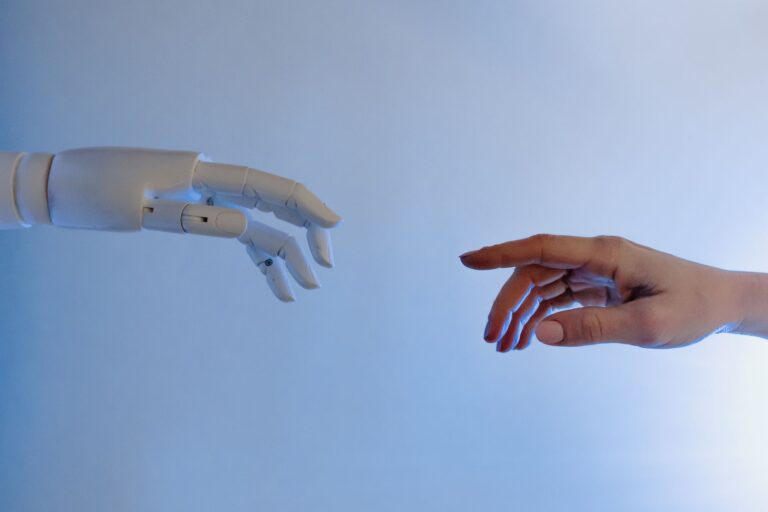
The shortage of talent in IT continues to fuel debates, but generative artificial intelligence is redefining the rules of the game. Rather than asking whether we should still fight for the “best” developers, let’s ask ourselves about this profound change: is AI simply transforming the way we work or is it revolutionizing the very nature of technical expertise? This evolution raises a fundamental issue that goes beyond the simple question of recruitment: the redefinition of what constitutes the value of a tech professional.
An eternal restart
For more than twenty years, the developer’s profession has been evolving to the rhythm of technological breakthroughs. From Google to forums like Stack Overflow, to ChatGPT today, each generation has experienced its “revolutions”, often perceived first as threats, before becoming productivity accelerators. But generative artificial intelligence is more than just an evolution: it is a new paradigm where the machine becomes a creative partner and not just a simple execution tool.
This transformation is part of a logic of continuous evolution specific to IT, but with an unprecedented intensity. The question is therefore not so much to fear novelty as to learn how to orchestrate this hybrid intelligence to take advantage of it. The challenge becomes strategic: how to transform this technological disruption into a sustainable competitive advantage?
Talent mapping in the era of generative AI
To understand the concrete impact of AI, we can distinguish three main profiles of developers:
- The technophile, passionate about bookstores and technical solutions.
- The hard worker, who spends hours debugging tirelessly.
- The creative, a true craftsman of the code, in constant search of innovations.
For the first two, AI represents a clean break: it executes searches or corrections in a few seconds that once required hours of work. But far from condemning them, it opens up unexplored prospects for them: that of becoming solution architects rather than executors of repetitive tasks.
More than a substitute, AI becomes a force multiplier: it automates repetitive tasks but exponentially enhances the value of critical thinking, insight, and ingenuity.
The creative is faced with a fascinating paradox: thanks to AI, they can turn their ideas into reality faster and explore more avenues. However, this increased freedom comes with a subtle trap: that of dispersing oneself in a profusion of prototypes without ever deepening operational excellence.
AI as a potential revealer, not a substitute
These examples show that each profile is simultaneously weakened and reinforced by AI. It all depends on its ability to appropriate these new levers of value creation. AI is therefore not an existential threat, but a catalyst that can compensate for weaknesses, amplify strengths and reveal previously unsuspected potentials.
To speak of the “end of the war for talent” would therefore be reductive. What is changing is not the need for skills, but the criteria that define excellence: no longer only the ability to produce efficient code, but the strategic mastery of AI tools and the ability to create differentiating value in a human-machine ecosystem.
The real challenge: training the experts of tomorrow
While GenAI is already a game-changer, it remains marked by structural limitations, such as autonomous driving, which is promising but not yet universal. The immediate challenge therefore transcends the simple question of recruitment to anchor itself in a more strategic issue: how to train future technology leaders?
Historically, developers have built their expertise by carrying out simple tasks, stone by stone, before increasing their skills. But if these foundations are now automated by AI, how can the next generation acquire this essential technical depth?
This question reveals a systemic challenge that engages the collective responsibility of companies, schools and institutions in preparing the professionals of tomorrow. It is a question of rethinking training paths to develop critical intelligence capable of supervising, directing and optimizing the capabilities of AI.
Towards a new war for talent: hybrid excellence
Ultimately, artificial intelligence is not the death knell for the war for talent: it is reinventing the rules and raising the stakes. The most sought-after profiles tomorrow will not be those who know how to code faster than the machine, but those capable of transforming AI into a lever for creativity, business vision and strategic innovation.
More than a substitute, AI becomes a force multiplier: it automates repetitive tasks but exponentially enhances the value of critical thinking, insight, and ingenuity. The strategic question is therefore no longer whether AI will replace developers, but how to prepare a generation of technology leaders capable of fully exploiting this symbiosis.
Because it is in this alliance between human intelligence and artificial intelligence, orchestrated by visionary professionals, that the future of skills is taking shape and that the decisive battle for tomorrow’s technological leadership will be played.

Bertrand Cocagne
Bertrand Cocagne is Director of Innovation & Technology at Linedata Lending & Leasing, defining technological choices and product roadmaps while leading the management and implementation of AI projects for clients.