The automotive industry is facing one of its most complex periods, shaped by rapid technological change and shifting consumer expectations. As the sector moves toward electrification and sustainability, the challenge is turning innovation into practical, scalable execution.
Despite the pace of change, many of the operational processes have not kept up. Engineers and technicians still rely on disconnected tools, manual reporting, and slow communication when resolving technical issues, which costs time when speed is critical. With 83% of automotive manufacturers planning to increase AI investment next year, and 51% preparing to adopt agentic AI, the industry is at a turning point. The question is no longer whether to change, but how quickly and how effectively it can be delivered.
Transformation begins behind the scenes
When you ask someone what defines the automotive industry, they’ll likely picture a high-performance car. But today, true speed starts with the workflows and systems that support the entire vehicle lifecycle. This is especially clear in Formula 1, where every millisecond counts.
It wasn’t long ago that F1 engineers still relied on spreadsheets, phone calls, or physically leaving the pit to seek technical support. Today, teams use AI-driven tools to detect and resolve technical issues in real time, changing how teams operate under pressure. Mobile-first IT allows engineers to identify, flag, and resolve problems instantly, wherever they are. Whether in the pitlane or factory, the need to leave workstations or wait in ticketing queues has been removed. The result is quicker resolutions, less downtime, and more consistent decision-making.
When people, processes and data are connected, teams can focus on what matters most. This is the model mainstream manufacturers should look adopt. It shows how operational discipline can be built into every part of the business.
Track-tested technology: Aston Martin Aramco F1
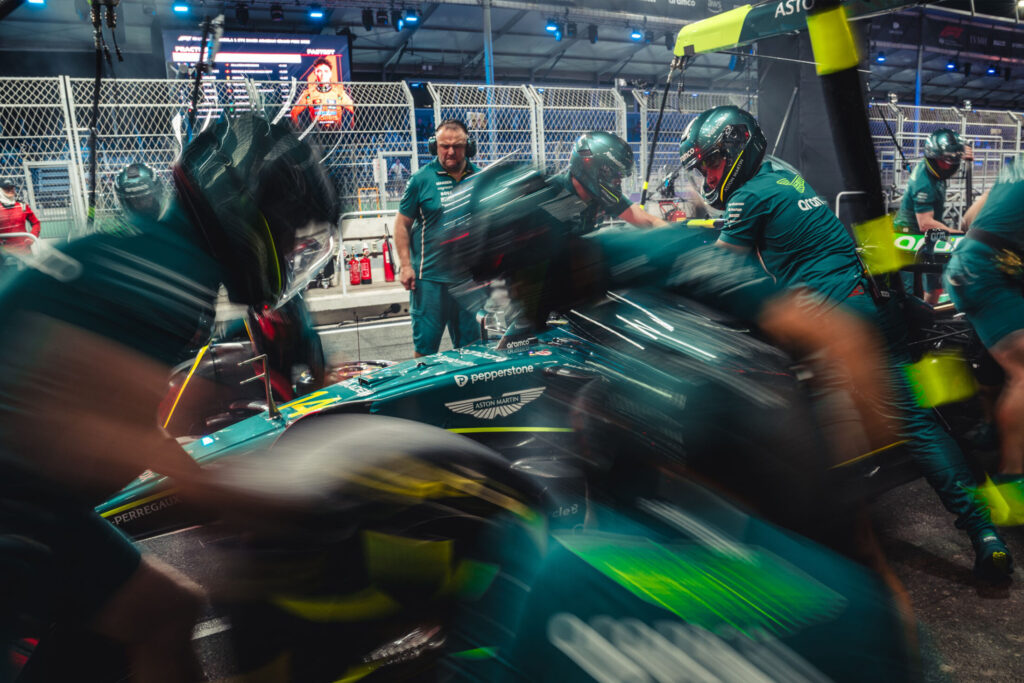
Track success for the Aston Martin Aramco F1 team relies on tight back-end coordination. This led to modernising its IT operations and employee experiences. The aim was not just to add new tools, but to rethink how support contributes to performance.
With AI-powered workflows in place, team members no longer lose valuable time chasing IT support. Engineers can flag incidents or raise service requests directly from their mobile devices, allowing teams to respond before issues affect performance. Every second saved supports results on track.
The transformation has extended beyond the track. By streamlining its ‘Joiners, Movers and Leavers’ process, Aston Martin Aramco ensures every new employee is equipped with the right hardware and software from day one. This approach reflects the team’s commitment to excellence on and off the circuit and offers a clear example for other organisations.
Scaling the lessons: AI across the vehicle lifecycle
In a sector where vehicles are expected to generate more than 25GB of data per driving hour by 2030, the challenge is no longer volume but precision. AI enables automakers to embed analytics directly into vehicles, supporting real-time decision-making even in low-connectivity environments. Across the vehicle lifecycle, AI optimises energy management and adapts systems to improve safety and efficiency.
AI is also transforming how manufacturers design and develop vehicles. By integrating generative design tools and AI-driven simulation, manufacturers can explore and test thousands of design variations virtually. This reduces the need for physical prototypes, shortens development timelines, and improves outcomes.
On the production floor, computer vision systems enhance quality control by identifying defects in real time, while intelligent automation streamlines supply chain operations and supports just-in-time delivery. With predictive analytics, critical equipment can run at peak performance; in the field, connected diagnostics enable faster servicing and better customer experiences. These capabilities turn data into a practical advantage.
Accelerating toward a smarter future
The future of automotive excellence will be defined not only by how fast vehicles can move, but by how intelligently they can operate. Reducing friction, enabling people, and embedding intelligence across operations all contribute to stronger results. To stay competitive, manufacturers must think beyond the vehicle and start building connected, AI-enabled operations.
AI isn’t just powering the vehicles of the future; it’s improving how the people who build and maintain them work. The leaders in this next automotive era won’t just have the fastest. They will combine strong engineering with smarter operations, as seen in Formula 1.