
On a typical morning, millions of people log in to work calls, stream lessons, or run AI-powered applications from home, all relying on fibre networks. Behind this everyday convenience lies one of the biggest infrastructure transformations of our time: the expansion of fiber-to-the-home (FTTH). About 74% of UK homes can now access full-fibre broadband services, as of January 2025. This rapid progress is the result of sustained national investments, collaborative ecosystem efforts, and a growing recognition that digital connectivity is as critical as power and water utilities.
From using generative AI tools at home to connecting smart factories and autonomous systems, optical fibre has become the silent engine that’s pulling all the weight. It’s the invisible force powering modern life, enabling remote education, telemedicine, cloud gaming, and a new wave of AI-driven use cases that demands near-zero latency and ultra-reliable bandwidth. But today, the bottleneck isn’t technology; it’s operations and execution. The next phase of the fibre revolution will not only be defined by what’s inside the cable but also by how efficiently we can deploy it across every street, suburb, and small town.
The promise of fiber-to-the-home (FTTH) has been clear for many years: high-speed internet for all, changing communities of all shapes and sizes, cities, suburbs, and rural areas. However, as the FTTH build continues to expand within metropolitan and mid-markets in the UK, a dilemma has emerged:
How quickly can providers turn on services? How efficiently can they manage labour? Can costs be kept within the budget?
The answers to these questions will determine who leads the next wave of digital infrastructure expansion. With increasing competition among alternate service providers and established operators, the race is not just to build, but to build smarter.
A new playbook for smarter FTTH deployments
The industry has made huge strides in optical performance, multi-gigabit speeds, PON evolution, and low-latency links. But some of the biggest leaps in efficiency are coming from simple, practical innovations on the ground.
A recent multi-market fiber rollout across dense cities and small towns revealed three game-changing shifts:
- Pre-terminated solutions
- Pull-friendly, bend-insensitive designs
- Smarter packaging and material handling
Each one delivered dramatic time savings, higher first-time-right rates, and faster connections to homes and businesses.
What these innovations share is a focus on operational simplicity, rethinking deployment from a field technician’s perspective rather than an engineer’s drawing board.
Pre-terminated cables have been one of the most powerful enablers. Factory-terminated and pre-tested, they remove on-site splicing and minimise reliance on specialized equipment. They make installs simpler, faster, and more consistent, especially in varied terrain or building types. By reducing installation time and improving quality control, operators can deliver to customers sooner and generate revenue faster.
Pull-friendly fibre designs featuring bend-insensitive fibers and low-friction jackets allow cables to glide through ducts with less tension, even in crowded urban corridors or tight indoor turns. It’s a small engineering upgrade that pays back in fewer damaged cables, reduced rework, and more predictable scheduling. These designs also make upgrades and maintenance easier, ensuring networks remain future-ready without major rework.
Smarter packaging reduces on-site waste by recycling cable reels. For installers, that means faster setup. For operators, it means cost savings and progress toward sustainability goals. It’s a practical example of how innovation and environmental responsibility can go hand in hand, achieving efficiency without compromising green commitments.
From infrastructure to operational excellence
Operators are rethinking their workflows, optimising technician productivity, and standardising quality controls across markets.
Cities are demanding faster, cleaner builds. And operators are under pressure to connect customers sooner while meeting sustainability metrics. The result: a new model of “operational scalability.” This concept goes beyond scale in numbers. It’s about replicating excellence across every project, geography, and crew.
The workforce multiplier
Skilled fibre technicians remain in short supply. But the answer isn’t always hiring more people; it’s helping existing crews do more.
Operational efficiencies, such as pre-terminated solutions and modular architectures, enable technicians to complete more connections per shift. Simplified, standardised processes make onboarding new technicians faster, helping close the skills gap while maintaining high-quality installs.
For instance, AI-enabled installation assistants and digital training modules are now being used to guide technicians in real time, helping them troubleshoot, verify connections, and maintain installation consistency. This fusion of human skill and digital support is redefining productivity in the field.
The takeaway: From technology to impact
Fiber-to-the-home has always symbolised progress connecting people, ideas, and opportunities. But in this new phase, progress is measured differently -it’s about how intelligently we can deploy the fiber. Efficiency is the new innovation. The leaders of tomorrow will be those who turn deployment into a science, balancing speed, quality, and sustainability with customer delight.
FTTH’s next chapter will be written in the field by the people, processes, and decisions that make every installation smarter, cleaner, and faster than the last. That’s how we move beyond technology and turn connectivity into enduring impact. As the world becomes increasingly AI-driven, these intelligent digital networks will form the nervous system of modern economies, carrying not just data but the future itself.
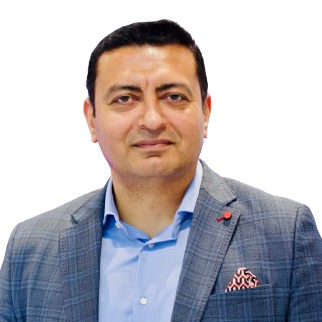
Rahul Puri
As Global CEO of STL, Rahul Puri leads the mission to build future-ready digital infrastructure and transform the global telecom landscape. With 25 years in senior roles at Apple, Samsung, Sony Ericsson, BlackBerry, and Airtel, Rahul has scaled businesses across diverse geographies by combining bold innovation with customer-centric execution.