
Discussions at the World Economic Forum in Davos last month suggested a growing consensus that the AI boom has yet to translate into meaningful growth and tangible return on investment. What’s missing is a sustained focus on real-world impact. Rather than debating theoretical potential, leaders should be asking a simpler question: what actual value does AI deliver on a Monday morning?
Answering that question shifts the conversation from possibility to performance. It forces organisations to put AI to work in day-to-day processes. This involves supporting frontline employees in their daily tasks, automating routine tasks for office workers, and enabling faster, better-informed decisions for leaders.
Ultimately, the companies that succeed will be those that design AI around people, build trust in intelligent systems, anticipate challenges before they arise, and strike the right balance between innovation and responsibility.
Measuring real value
Following years of conceptual discussion across many industries, we’ve reached a turning point: The focus is shifting away from isolated AI pilot projects and toward practical deployment at scale. Businesses are implementing AI to proactively monitor, manage, control, and repair systems and processes. In these real-world applications, value becomes both visible and measurable.
For example, adoption in manufacturing has moved firmly into the mainstream, with 78% of manufacturing leaders now using AI on a weekly basis. As a result, employees are feeling the impact, increasingly automating routine, time-intensive tasks, meaning their attention can be shifted to more strategic operations. Within the manufacturing industry, AI is most commonly applied to areas such as customer support, data analysis, and supply-chain optimisation, where it is helping to improve efficiency, consistency, and quality on the factory floor. In fact, data shows that employees save an average of 10 hours per month, enabling them to focus on higher-value activities.
Across most industries, we’re going to start seeing ecosystems of AI agents, integrating data from HR, security, collaboration, and IT systems to optimise the employee experience.
As well as this, AI’s value is clear across the retail industry, with 57% of those in the retail, catering, or leisure industry either fully embracing or selectively using AI. Businesses use it to proactively monitor and manage connected devices, systems, and environments across stores and warehouses. And they’re doing so with real-time remote support and augmented reality tools, which allow technical teams to access devices on demand. What’s more, they can diagnose issues faster and resolve them without the constraints of location. By removing geographical barriers, AI-powered support enables staff to address issues much faster than before.
In many cases, these deployments are not endpoints, but a foundation that creates the confidence and trust required for more advanced AI capabilities to follow.
The agentic era
With AI embedded in day-to-day operations, the next question is how these systems evolve. While agentic models are still in their early stages of adoption, being used by around 7% of UK businesses, they represent a stepping stone from reactive to proactive, and ultimately autonomous ways of working. Real progress toward autonomy will depend on the impact being delivered today, using the AI already in place to prove value, build confidence, and lay the groundwork for more autonomous, agent-driven models over time.
Across most industries, we’re going to start seeing ecosystems of AI agents, integrating data from HR, security, collaboration, and IT systems to optimise the employee experience. These agents don’t just fix problems, they anticipate them, personalise experiences, and continuously improve digital environments. All of which is already being tested and applied in limited, real-world scenarios.
But while these capabilities are already delivering value today, they still depend on humans to interpret and act on the information. For agentic AI to deliver greater impact in real-world environments, leaders must focus on how humans and machines work together. Trust, clear guidelines, and ongoing education help employees understand where AI is adding value now and how that value can expand over time, creating a platform for greater autonomy.
This approach creates the foundation for teams to move gradually from AI-supported work to more autonomous ways of operating, a shift that is already beginning as organisations experiment with agentic AI.
Monday morning promises
The consensus among the world’s biggest tech leaders in Davos is that AI’s promise will not be realised through grand predictions and vision alone. Its impact is determined when systems run more smoothly, decisions are made with greater confidence, and teams start the week with fewer obstacles in their way. This is where value moves from aspiration to reality.
As agentic AI begins to take shape, leaders are right to proceed with caution. While its full potential may still be emerging, its direction of travel is clear, and many organisations are already developing their strategies. By anchoring innovation in trust, responsibility, and human-centred design, businesses can ensure that AI delivers not just future advantage, but real, measurable value – starting on a Monday morning.
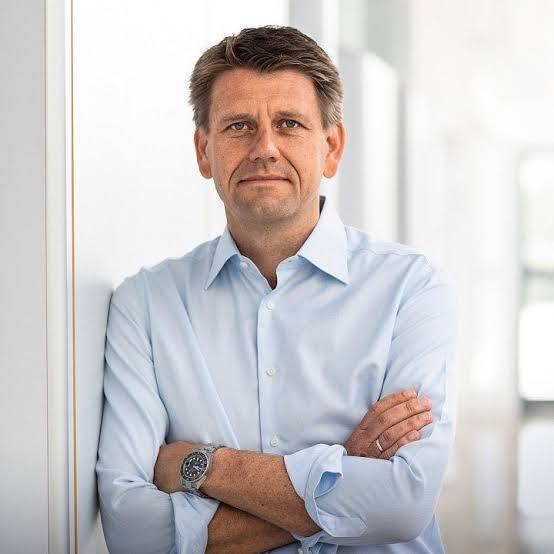
Oliver Steil
Oliver Steil has led TeamViewer as CEO since January 2018 and has served as Chairman of the Management Board since the company’s IPO. An internationally seasoned executive, Oliver has a strong track record of scaling technology businesses and steering them to sustained success.