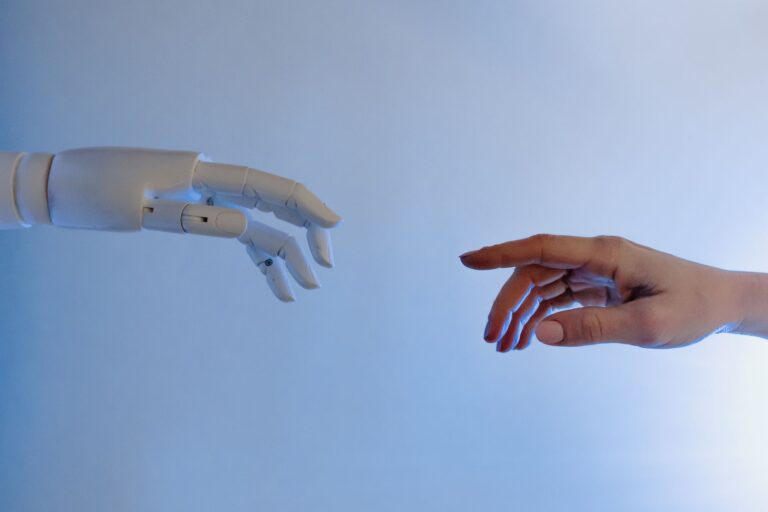
Few topics spark more speculation, or anxiety, than the impact of artificial intelligence (AI) on work.
For some, it promises liberation from routine; for others, it raises concerns about job disruption. Yet neither story fully captures the truth. The real transformation unfolding inside organisations is not about removing people from work but redesigning how people and intelligent systems work together
Enterprise investment in AI is accelerating at a historic pace. Gartner forecasts global spending to reach $2 trillion by 2026, and by 2028, 40% of employees will receive their first training or coaching from AI systems, up from less than 5% today. Far from making people obsolete, these figures highlight a profound shift: AI is disrupting what people do at work. Sometimes AI helps people accomplish more than they thought possible – and sometimes it removes the tasks that they loved best.
From anxiety to collaboration
For years, public debate has framed automation in binary terms, human versus machine, replacement versus survival. That lens is too narrow for the age of pervasive AI.
Across sectors, AI is increasingly embedded in daily workflows, generating insights, drafting content, reviewing code, and guiding customer interactions. The conversation has evolved from “What work will be left for humans to do?” to “How can people use AI to solve their biggest challenges?”
The most successful companies embrace collaboration when it helps people achieve more. And they choose AI as substitution when it helps people – either by making customer experience better, or by taking over unsafe work. When designed intentionally, AI doesn’t hollow out work, it expands what work can achieve
In radiology, for example, AI image analysis has not replaced radiologists; it has increased demand for their expertise as diagnostic volumes grow. In software engineering, AI coding assistants are accelerating development cycles, not removing developers, but enabling them to focus on design and innovation. These examples point to a larger truth: when humans and AI collaborate effectively, both productivity and purpose rise.
The four futures of AI at work
To understand how this transformation might unfold, Gartner’s “AI-first vs. human-first” framework, which describes how organisations balance automation and augmentation, defines four models of future work. Each carries unique implications for leadership, culture, and strategy.
Some organisations will use AI to handle repeatable processes while humans concentrate on judgment-driven, interpersonal, or creative tasks. Others will move toward AI-first operations, where intelligent agents make semi-autonomous decisions in finance, logistics, or customer service. Many will deploy AI to help employees work better and do more, embedding assistance directly into the flow of work. And at the frontier, innovators will use AI to extend human capability and enable problem-solving previously out of reach.
Just as previous industrial revolutions elevated humanity through mechanisation and digitisation, this one will do so through intelligence, human and artificial, working side by side.
These models aren’t mutually exclusive. Most organisations will operate across several simultaneously, AI-first in some domains, human-first in others, evolving as their technology, governance, and workforce maturity develop. The key for leaders is to consciously design where and why each approach applies.
Mindset shapes outcomes
Technology sets the possibilities; mindset defines the outcome.
Gartner research says that the distinction between scarcity and abundance mindsets emerged as a critical determinant of success. A scarcity mindset asks, “What’s left for me when AI takes over?” An abundance mindset asks, “What new possibilities can we create with AI?”
Organisations that adopt the latter see AI as part of their mission, a partner in tackling complex challenges, scaling limited resources, and fuelling innovation. They invest in communication, transparency, and upskilling to build trust between humans and machines. They recognise that the real competitive advantage lies not in deploying more AI, but in deploying it more intelligently and ethically.
Leadership language plays an outsized role here. Framing AI as a teammate rather than a threat changes how employees engage with it. The words “AI is here to help you work smarter” are far more powerful, and ultimately more productive, than “AI will take over these tasks.”
Redefining performance, value, and trust
As AI permeates every role, companies must rethink what performance means. Traditional metrics like headcount, utilisation, and task completion will no longer capture value in an AI-intensive enterprise.
Leading organisations are shifting toward capability-based measures, evaluating how effectively humans and AI together deliver outcomes, not simply how efficiently work gets done. Managers and employees will increasingly oversee both human and algorithmic performance, ensuring AI outputs remain transparent, auditable, and aligned with organisational ethics.
This will require new governance models. Trust will become a defining currency of the AI-enabled enterprise: trust in data, in algorithmic decisions, and in the people responsible for overseeing them. Those that manage this balance well, embedding oversight, accountability, and fairness into design, will unlock higher productivity and stronger stakeholder confidence.
Work redefined, not replaced
The next era of enterprise performance will not hinge on the quantity of people employed, but on the quality of collaboration between humans and AI.
AI will automate the routine, accelerate the repeatable, and illuminate the invisible, yet humans will remain central to innovation, empathy, and ethics. The organisations that thrive will be those that anticipate AI’s ripple effects and design collaboration that amplifies human potential alongside intelligent systems.
Just as previous industrial revolutions elevated humanity through mechanisation and digitisation, this one will do so through intelligence, human and artificial, working side by side. The goal is not a worker-free enterprise, but a work-redefined enterprise: adaptive, creative, and profoundly human at its core. Because being “AI-first” only succeeds when it is, above all, people-first.
Gartner analysts will further explore the impacts of AI on jobs and organisations at the Gartner IT Symposium/Xpo™ in Barcelona, from 10–13 November 2025.