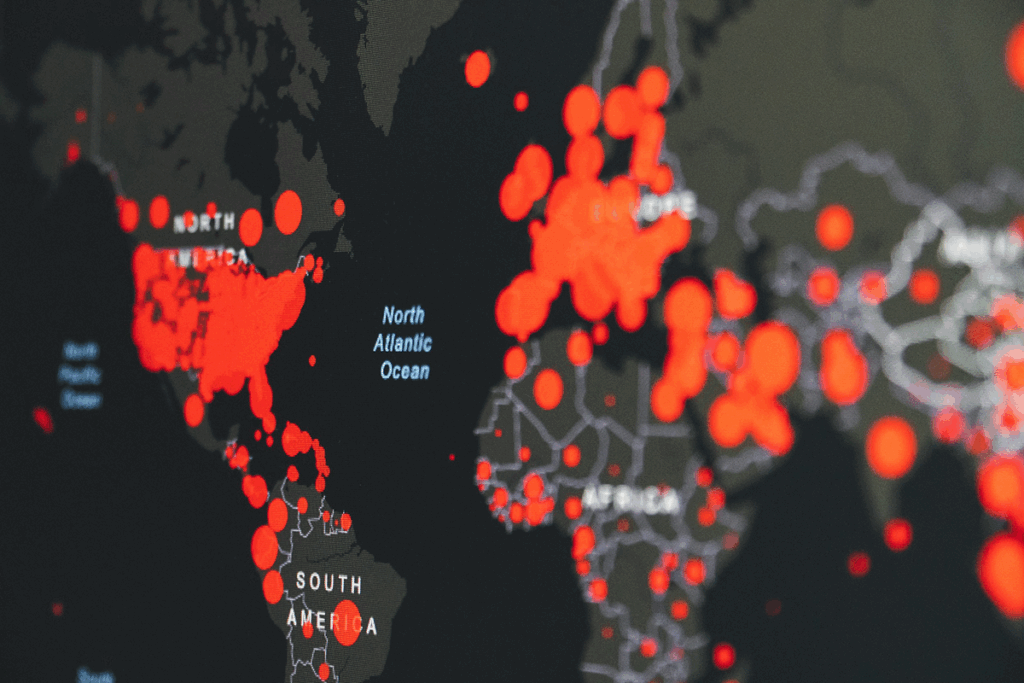
The vulnerabilities of global supply chains have been laid bare in recent years. From inflationary pressures and shifting trade policies to extreme climate events and a global pandemic, a perfect storm of disruption has left businesses scrambling to adapt. The result is a sharp reminder that supply chains, while resilient in some respects, remain highly exposed to systemic shocks.
To withstand this turbulence, organisations must think more strategically about resilience. One essential step is supplier diversification. Over-reliance on a single supplier or narrow sourcing geography magnifies risk. By broadening their supplier networks, companies can insulate themselves against localised crises and strengthen operational flexibility.
Another strategy lies in bringing production closer to the point of consumption. Localised manufacturing reduces dependence on long, fragile global routes and enables smaller facilities to pivot more quickly to regional demand shifts. This not only shortens lead times but also allows companies to respond more nimbly to customer needs.
The most important and indispensable step, however, is technology integration. With it, organisations can have granular, real-time visibility into goods as they move through the supply chain, enabling more agile response to disruption. Knowing precisely where a delay occurs helps prevent minor slowdowns from snowballing into full-scale breakdowns, keeping supply chains moving even under pressure.
Smarter connectivity
Embedding intelligence into products allows real-time tracking and management of goods, helping to predict disruptions, monitor goods, and optimise logistics. But to achieve ubiquitous connectivity, there are several hurdles to overcome.
First is cost. Smart functionality typically relies on silicon semiconductors – otherwise known as microchips – but it’s expensive to add a silicon chip to every item in the supply chain. The long lead times and high costs associated with standard chip design mean that it is best reserved for creating complex, high-spec chips in applications that demand commensurately high performance. However, this means that production is rarely agile, and rapid customisation is not an option. Yet the value of the intelligence must outweigh the cost of implementation – and it must be quick and easy to deploy.
Environmental impact is also a consideration: current production of silicon-based semiconductors uses vast amounts of water and energy, and up to 30 different process gases, many with considerably higher global warming potential than CO2. Their production also involves shipping the various components around the globe to areas of expertise, which slows production and increases carbon emissions.
Beyond silicon: where item-level intelligence becomes possible
Non-silicon semiconductors – chips that use new, sustainable materials – have the potential to change the narrative around item-level intelligence, unlocking the potential for implementation at scale throughout the supply chain.
New materials allow for simplified production processes at much lower temperatures than silicon, consuming significantly less energy and water, and fewer harmful chemicals. This both drives down cost and reduces carbon impact, making low-cost, sustainable, item-level intelligence a reality. It also allows end-to-end production at a single site. As a result, production is significantly faster – typically just a few weeks, compared to the months of standard chip production – making customisation rapid and agile.
Such chips are ultra-thin and physically flexible, making it possible to deploy them almost anywhere – from clothing and textiles to bottles or coffee cups – with few constraints on form-factor.
Embedded directly into packaging, they’re imperceptible to the touch. They don’t encroach on product branding, can’t be covered or replaced – and are robust enough to withstand the rigours of transportation.
This low-cost technology makes it viable to add intelligence to high-volume products, making insights available to retailers and increasing widespread adoption.
Scaling intelligence across the supply chain
The benefits of implementing item-level intelligence in the supply chain are numerous, leading to increased efficiency, transparency, and adaptability around stock lifecycle and inventory management.
These integrated circuitssin combination with sensors and RFID tags, allow end-to-end visibility of individual items as they pass through the supply chain, enabling monitoring of precise location, movement – and even condition – in real time.
This level of transparency allows businesses to reduce the risk of loss or theft, identify bottlenecks, optimise inventory, and monitor transit conditions such as temperature and humidity, ensuring quality control and minimising waste.
Monitoring individual items, rather than relying on aggregate stock data, reduces the likelihood of overstocking or stockouts, and allows just-in-time inventory systems to reduce carrying costs and increase cash flow. Rapid identification of delays – from production slowdowns to transportation issues or customs holdups – means disruptions can quickly be traced to their source, and corrective action taken.
Item-level intelligence provides the foundation for supply chains that are not only more efficient and transparent, and better equipped to withstand future crises.
The benefits of implementing item-level intelligence in the supply chain are numerous, leading to increased efficiency, transparency, and adaptability around stock lifecycle and inventory management.
These integrated circuitssin combination with sensors and RFID tags, allow end-to-end visibility of individual items as they pass through the supply chain, enabling monitoring of precise location, movement – and even condition – in real time.
This level of transparency allows businesses to reduce the risk of loss or theft, identify bottlenecks, optimise inventory, and monitor transit conditions such as temperature and humidity, ensuring quality control and minimising waste.
Sustainable intelligence for a stronger future
Such chips represent a new chapter for supply chain management where connectivity is both affordable and environmentally responsible. By combining cost-effective intelligence with sustainability, they make item-level tracking not just feasible, but practical for businesses of all sizes.
As industries navigate ongoing volatility and seek to optimise management opportunities, the ability to monitor, trace, and optimise products at every stage of their journey will become vital. Item-level intelligence provides the foundation for supply chains that are not only more efficient and transparent, and better equipped to withstand future crises.

Shane Geary
Shane Geary is EVP – Manufacturing and Operations at Pragmatic Semiconductor. With three decades of experience in semiconductor manufacturing, Shane has held senior positions spanning Operations and R&D. Before joining Pragmatic, he served as Vice President of Wafer Fab Operations and Technology at Analog Devices, overseeing multiple fabrication facilities in both the US and Ireland. Shane holds a BSc in Applied Physics and Electronics, along with Master’s degrees in Microelectronic Engineering and Applied Statistics.