
Strip away the hype, the headsets, the speculative land sales, and the idea behind ‘The Metaverse’ is a quite simple one: the web is the internet’s way of delivering documents – pages you read. For nearly thirty years, I and many like me have been trying to build the internet’s way of delivering places (the environments you enter with other people from wherever you happen to be).
I have been working on this problem since around 1998, starting with Active Worlds (and shortly later, a platform of my own called Fabric – which nobody remembers), later helping found OpenSimulator before getting involved with Sinewave.
In this time I have watched the idea go through at least four rounds of hype – the virtual worlds of the late 1990s, Second Life and its ‘corporate islands’ in the late 2000s, the VR wave of the mid-2010s (High Fidelity, Sansar and friends) and, in 2021, Facebook renaming itself and yet another mercifully brief market in ‘virtual real estate’. Each time, the world’s attention left about as quickly as it arrived – and the conclusion drawn was pretty much the same – ‘nobody really wants shared 3D places’. That conclusion is, and has always been wrong.
Roblox has well over a hundred million users a day. Minecraft sold over 300 million copies of what is, at its heart, a shared 3D place with some rules, and Second Life users have traded more than $4 billion between themselves on a platform that is still thriving. The demand has never been the problem, and neither were the economies.
So what was the issue? The places were hard and expensive to build, and for almost everyone impossibly difficult.
Compare that to what the web did for documents – its real achievement was not technical brilliance (HTTP is an almost embarrassingly simple protocol) but turning online publishing from a R&D project into an afternoon’s work, and taking the online population from thousands to billions. This is the moment 3D has never had.
To model a convincing place by hand still takes a skilled team weeks or months, which is why the successful worlds got there by giving their users blocky building tools and simple rules – and why a professionally modelled environment such routinely costs six figures or more (and that’s why GTA 6 has a total spend in the billions). Regardless of whether you’re a teenager building a world for your friends, a teacher building a classroom or an artist modelling a fantasy world, you have been stuck behind the same fundamental wall – it’s hard.
"What AI can give us is what the hype never could: places that can be made as easily as pages, reachable by anyone."
This is the first place AI changes things, right now. A 3D model of a real place can now be built from ordinary photographs or video in a few minutes to hours of computing time rather than weeks of modelling, and it’s not just static content – every object can be recognised and therefore made functional. AI models are starting to do the same for places which have never existed, working from a sketch or description. If photographing a place, or describing it, is enough to make it real, 3D finally has its day.
The other thing anyone who wandered into a virtual world on a quiet night will remember is that there was nobody there – you’d find a beautifully built place with one other avatar in it, usually the person who built it, wondering where everyone was. The simple (and wrong) answer would be to fill the gap with AI agents to talk to. People come to shared places online precisely for the other people. The parasocial relationships some people form with AI bots isn’t a healthy expression to be encouraged – but what AI can do is remove the reasons people fail to find each other and form real bonds; a host that says hello when you arrive and points you at the real people is worth more than any number of chatty characters. Most of the worlds that survived did so on the backs of a few volunteers answering the same newcomer questions at two in the morning, and AI can definitely help with that. It’s also pretty great at providing realtime translation allowing people to bridge between worlds, and it can make it easier for people to start, and find communities together.
Then there was getting in at all. For most of the last twenty years, visiting a virtual world meant downloading a few hundred megabytes of client, running an installer, fighting with software and more recently buying a headset, and you lost a chunk of people at every one of those steps – sometimes losing 80% of the audience before they even arrived. AI hasn’t (yet) fixed that one, but the browser did at pretty much the same time – a proper 3D world now runs from anywhere at the ease of clicking a link.
The part that gets the least attention is probably the most important. Someone setting up a new multiplayer 3D world today needs to build (at least); account systems, 3D rendering, stupidly complex networking, avatars and content tools, before even getting into what makes their world interesting. This is a colossal amount of redundant work – which is why it has mostly been the largest companies who tried, each building their own incompatible version behind closed doors – you had to pay that cost back. Our own platform took the better part of a decade to build. These days I write the specification and AI agents write the code, at a speed that still surprises me, and the scarce resource is no longer accessible to a hundred engineers – it’s the specs, taste and the judgement about what actually works. For some of us, that’s a huge advantage; we have nearly thirty years of experience to bring.
Whatever AI delivers, it definitely won’t be the 2021 version, and I really wouldn’t want it to either. That one was a land grab – one company’s platform with the rest of us renting space inside it – and every generation before it was built much the same way, as walled gardens with their own identities, their own formats and their own cut of everything made inside them. Sadly over much of the last twenty years lots of creative and interesting work died with the platforms that hosted it or the subscription fees that stopped being paid.
What AI can give us is what the hype never could: places that can be made as easily as pages, reachable by anyone. Whether this ends up as one more set of walled gardens versus a 3D web no-one owns is no longer a technical or even a business question.
This isn’t a new idea. No company owns the web – and everybody competes fairly above the plumbing layer. The 3D web needs the same deal, open and free for anyone to build on. For the first time, those of us outside the largest companies now have the tools to be able to build it; which is a long way of saying I’m more optimistic about this than I’ve been in years.
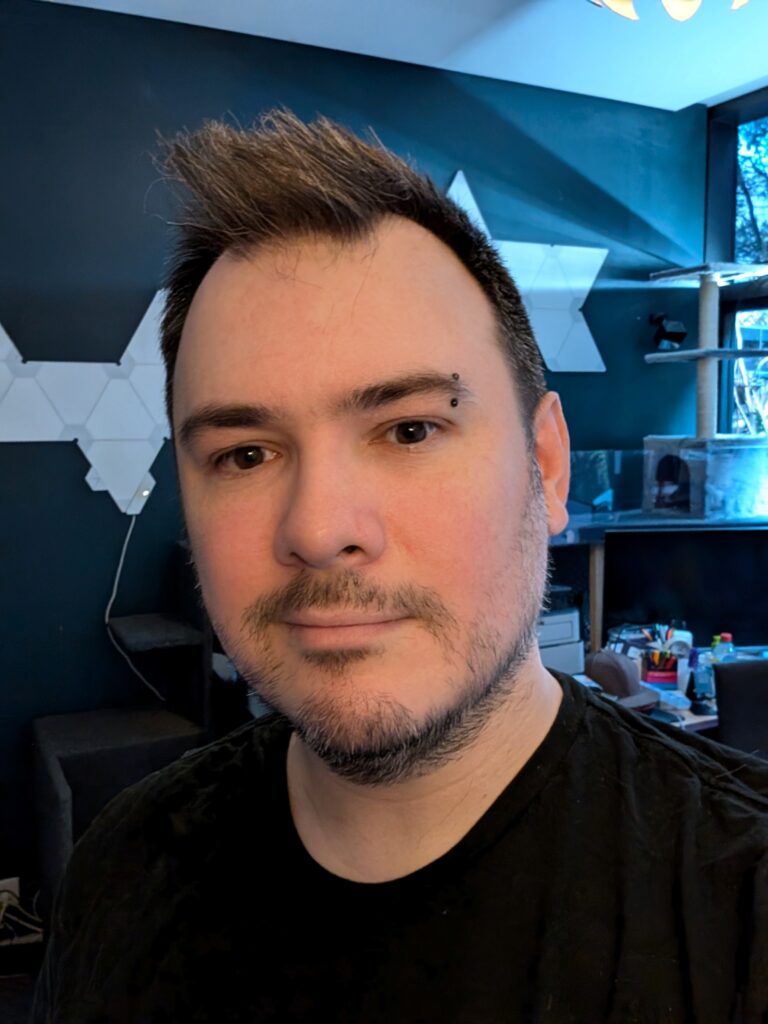
Adam Frisby
Adam Frisby is CEO of Sinewave. A seasoned expert with over 25 years in the virtual world domain, Adam is the visionary behind OpenSimulator, Azure Islands and DeepThink.