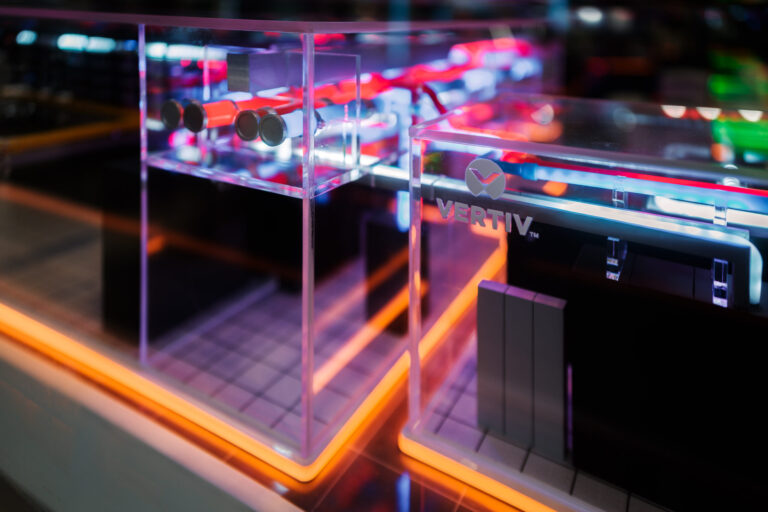
The recent planning submission for a £3.8 billion AI data centre in West Sleekburn, Northumberland shows how quickly regional infrastructure is moving to the centre of Britain’s digital strategy. As the UK accelerates its national AI ambitions and demand for processing power grows, the technology sector is moving away from slow, traditional construction. Instead, operators are turning to rapidly deployable, modular flatpack facilities and regional clusters to bring computing capacity online in a fraction of the usual time.
Factory-built modular units help address the immediate real estate shortage, built in standardised enclosures off-site and shipped directly to regional locations, bypassing the multi-year planning and construction delays typical of traditional brick-and-mortar facilities. However, building this quickly brings serious day-to-day operational challenges: these units pack vast computational power and electrical demand into a much smaller physical space.
If Britain’s AI expansion is to remain scalable, technology leaders must look beyond rapid construction and focus on optimising how these sites operate behind the scenes.
Solving the high-density cooling challenge
Modular flatpack facilities pack powerful computer servers into compact spaces, with Goldman Sachs research projecting that data centre heat density could reach up to 176 kW per square foot by 2027. This heat is so extreme that traditional air cooling struggles to cope. Older air conditioning systems work by blowing huge volumes of chilled air across server racks. Applied to modern AI processors running heavy workloads, this requires unsustainable amounts of electricity, overburdens local power grids, and often fails to stop chips overheating and slowing down.
The impact on local water supplies is just as serious. A standard 1-megawatt facility using traditional evaporative cooling towers can consume up to 25.5 million litres of fresh drinking water every year. When multiple modular units cluster together in regional communities, drawing that much water from municipal supplies strains local networks and invites tough regulatory scrutiny. To manage these heat loads responsibly, operators must move away from air and water-based methods entirely and adopt closed-loop liquid and direct immersion cooling systems.
Submerging high-performance servers directly into specialised, non-conductive fluids transforms thermal management, carrying heat away up to 1,200 times more effectively than air and slashing cooling power usage by up to 90%. Liquid immersion maintains a consistent temperature, absorbing heat directly from the processor chips without the turbulence and wear caused by high-speed spinning fans. Because these systems run as sealed, closed loops that continuously recycle the same fluid, they consume no fresh drinking water, protecting local reserves, improving energy efficiency ratings, and keeping expensive chips safe from heat damage caused by continuous use.
Embracing circularity to avoid the e-waste trap
Building data centres faster should not mean throwing equipment away sooner. The traditional habit of replacing working hardware every three years for only a minor speed boost is wasteful and expensive, and in a market troubled by fragile supply chains and shifting trade tariffs, constant purchases of brand-new equipment drive up costs and create project bottlenecks.
The scale of electronic waste is a growing problem. Data from the United Nations Global E-Waste Monitor shows that the UK produces 1.65 billion kilograms of e-waste yearly. Globally, of the 62 million tonnes of e-waste generated in 2022, less than a quarter was properly collected and recycled. Rushing through constant hardware replacement cycles to power AI will only make this waste crisis worse if equipment management stays linear, with hardware disposed of rather than reused.
"Modular flatpack data centres offer a practical way to roll out regional computing capacity quickly. However, speed of construction is only the first step in creating a dependable national digital network."
One of the most effective steps is keeping servers, storage and networking gear running long after their official end-of-service-life date, as hardware doesn’t stop working simply because a manufacturer’s support notice says so. Working with third-party maintenance providers gives IT teams access to experienced engineers and tested replacement parts, keeping reliable hardware in service for years past warranty expiration and cutting maintenance bills by up to 40% compared with standard manufacturer contracts.
Similarly, buying certified, second-hand hardware for daily business tasks protects companies from global shipping delays, freeing up capital that would otherwise go towards unnecessary upgrades, which can be redirected into specialised AI chips instead. Finally, when equipment genuinely reaches end of life, certified asset disposal ensures private data is completely erased and valuable metals are recovered. Treating enterprise hardware as a reusable resource speeds up project rollouts and keeps significant volumes of working technology out of landfill.
Maintaining uptime through automated, remote monitoring
Placing modular flatpack units in decentralised, regional locations creates clear operational blind spots. Unlike giant central data centres staffed around the clock, regional modular pods often run unattended, making manual checks impractical. If a server suffers a power glitch or cooling fault inside an unmanned unit, entire AI projects can stall before off-site engineers even know where to look.
To prevent expensive outages and protect operating budgets, operators need central management software equipped with automated monitoring and predictive analytics. Modern monitoring systems use lightweight software agents across remote sites to collect health data from servers, storage units and operating systems, without needing sensitive administrator passwords.
Feeding this live data into central dashboards lets operators spot small warning signs, such as memory errors or rising temperatures, and fix failing parts before they cause a full system crash. The software pinpoints the exact part number needed and automatically arranges for an engineer to arrive with the replacement part already in hand. This automation cuts out wasted diagnostic visits, speeds up repairs, avoids emergency shipping fees, and keeps distributed systems running without interruption.
Building for the long-term
Modular flatpack data centres offer a practical way to roll out regional computing capacity quickly. However, speed of construction is only the first step in creating a dependable national digital network.
If regional computing hubs are to support the UK’s technological and economic growth over the coming decade, rapid construction must be matched by smart operational management. Combining factory-built units with closed-loop liquid cooling, circular hardware practices and automated monitoring means Britain’s AI infrastructure is not just fast to build, but built to last.

Chris Carreiro
Chris Carreiro is Chief Technology Officer at Park Place Technologies where he is accountable for Corporate Innovation, Research and Development, and new portfolio offerings. Chris was one of the founders of ParkView, and a key player who helped transform Park Place into a Data Center Services company. He is well-versed in emerging technologies like Edge, AI, blockchain, and Liquid (Immersion) Cooling.