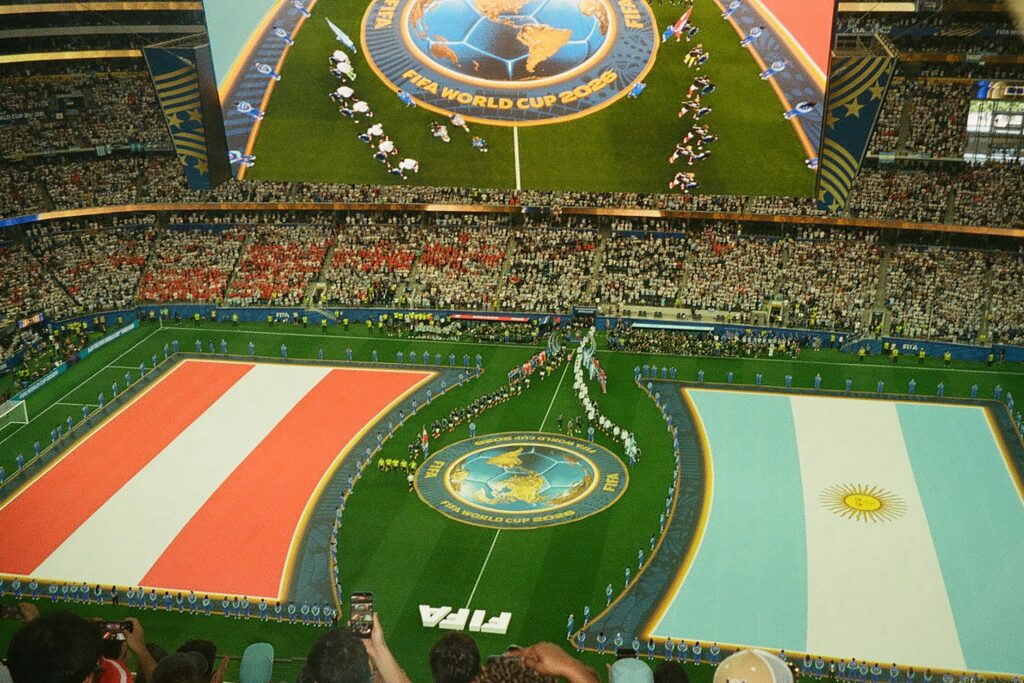
The sheer scale of the technology behind the FIFA World Cup 2026 has offered many useful lessons for building successful urban infrastructure. Delivering the World Cup to billions around the world requires the equivalent of building multiple‘smart cities’, all operating at once, and on the move. Spanning 16 cities, 48 teams and 104 matches, the challenge of delivering AI-powered innovation on the ground and in broadcasts around the world offers learnings about how to drive innovation and boost operational resilience in a way that could reshape how cities, transport networks and public services operate in the coming years.
Many of the challenges faced by the technologists delivering the World Cup are familiar to urban planners. These range from improving video feeds with AI to ensuring that large crowds can move safely through cities and venues, alerting planners to problems on the fly. The scale of the World Cup more than matches that of delivering smart city infrastructure, with more than 25,000 devices, hundreds of specialists and 600 different FIFA sites from stadiums and broadcast centers through to team base camps, venues and command centres.
Sporting tournaments are innovation labs
The smart cities of tomorrow will be powered by their ability to process massive amounts of real-time data from connected sensors, turning them into meaningful action. This information will assist in making cities cleaner and more efficient. However, delivering these benefits at scale requires robust, cutting-edge digital infrastructure. Major global events such as the World Cup have created a valuable testing ground, allowing cities to see how these technologies perform under unprecedented levels of demand.
FIFA’s AI Pro tool used at this year’s tournament, demonstrated how AI can make sophisticated data analysis more widely accessible. By analysing more than 2,000 performance metrics the platform provided all 48 teams with rapid insights through reports, video clips and immersive 3D match recreations, capabilities that were once largely reserved for the wealthiest federations. For smart city planners, AI analytics could have a similarly democratising effect, making reliable insights available to more authorities and helping them make better use of the data already being generated across their cities.
Access to reliable, high-resolution real-time information will be equally important. The World Cup demonstrated this through AI-powered Referee View, which used image processing to stabilise and enhance footage from referee body cameras in near real time. Similar capabilities could have applications across smart cities, where combining live video with data from sensors and radar could give transport planners and public authorities a clearer picture of what’s happening on the ground, helping them identify disruption and respond more quickly.
The World Cup and operational resilience
Airports, transport hubs and public services also have much to learn from the sheer scale and real-time stresses of delivering a multicity event like the World Cup. The broadcast challenges alone are complex, with dedicated filming crews at all venues, and 200 different broadcasters working live to deliver around the world. Each match involved up to 45 different cameras, combined with 3D avatars used to reconstruct moments on pitch. Centralising control, and using AI to streamline these elements, was vital.
Behind the scenes, an Intelligent Command Centre aggregated data from 40 FIFA functional areas, allowing officials to oversee everything from security to ticketing. The command centre brought fragmented operational data into a single shared environment, meaning that it was easier for broadcasters and stadiums to identify issues early and respond rapidly. For airports, transport networks and public services, the lesson is clear: combining real-time data with AI and centralised oversight can strengthen operational resilience, particularly when managing complex environments under pressure.
Travelling safely
Smart city planners can also draw important lessons from how AI can help fans move safely, and efficiently through venues. During the World Cup, ‘digital twins’ of venues provided organisers with real-time venue intelligence, helping them keep track of trends and movement patterns.Applied at city scale, the same technology could give authorities a dynamic view of transport hubs, roads and public spaces, helping them anticipate congestion and coordinate services more effectively.
With Smart Wayfinding, fans were able to explore landmarks such, fan zones, and other key points of interest within an interactive space.while AI-guided navigation reducing friction, rerouting fans around security cordons in real time In a smart city, similar capabilities could help commuters avoid disruption, redirect pedestrians around overcrowded areas or guide visitors towards alternative transport routes in real time.
Towards smarter cities
The polished entertainment spectacle that was the FIFA World Cup 2026 entranced billions around the world and made possible by invisible background technologies such as AI and digital twins. The coordinated, intelligent way that the World Cup employed technology to reduce friction and deliver for fans offers many important lessons for the city planners of today and tomorrow, and a blueprint for keeping millions of people safe, happy and entertained.

Andy Rhodes
Andy Rhodes is Managing Director UK&I at Lenovo. Previously, Andy spent more than a decade at Dell in a range of executive positions across its data centre, workstation, and Industrial IoT businesses.